When DMACC’s new Crime, Code & Clues Camp was announced in late Spring, more than 130 high school students applied within the first five days.
The college had promoted the event – a four-day summer experience designed to challenge high school students to solve a mock criminal investigation using artificial intelligence, digital forensics and crime scene investigation techniques – by advertising across the metro and partnering with College and Career Transition Counselors at area high schools to support in recruitment ahead of posting the application to the website.
Held July 13 to 16 on DMACC’s Ankeny Campus, the camp welcomed 21 students to the in-person program, where participants earned one DMACC college credits at no cost thanks to support from Microsoft. The overwhelming interest prompted DMACC to launch a virtual camp, which served an additional 16 students who’d been put on a waiting list.
This summer marks the third Microsoft-funded AI camp facilitated by DMACC faculty, but it was the first year that the event’s theme combined CSI (Crime Scene Investigation) with Artificial Intelligence.
One of the organizers – long-time DMACC faculty member Bryan Burkhardt, Professor of Business and Information Technology – said he is always looking for ways to build cross-disciplinary learning opportunities with the college’s “talented and collaborative faculty and staff.”
As such, the idea for the camp – dubbed internally as “CS(A)I” – hatched during a brainstorming session with fellow faculty member and Cybersecurity program chair, Doug Elrick, who many years ago became the first digital evidence examiner for the State of Iowa’s Division of Criminal Investigation Crime Laboratory. Burkhardt and Elrick leveraged their extensive contacts within the investigation field and experience working with the Criminal Justice program at DMACC.
“We wanted to create an experience to show students how technology is increasingly connected to real-world investigative work,” Burkhardt said.
Throughout the week, students worked through a realistic mock criminal investigation; the scene, storyline, list of suspects and all possible evidence was developed and generated in-house by DMACC faculty.
“The AI content was derived from the real-world need to help organize and refine evidence and streamline processes for a more efficient investigation,” Burkhardt said.
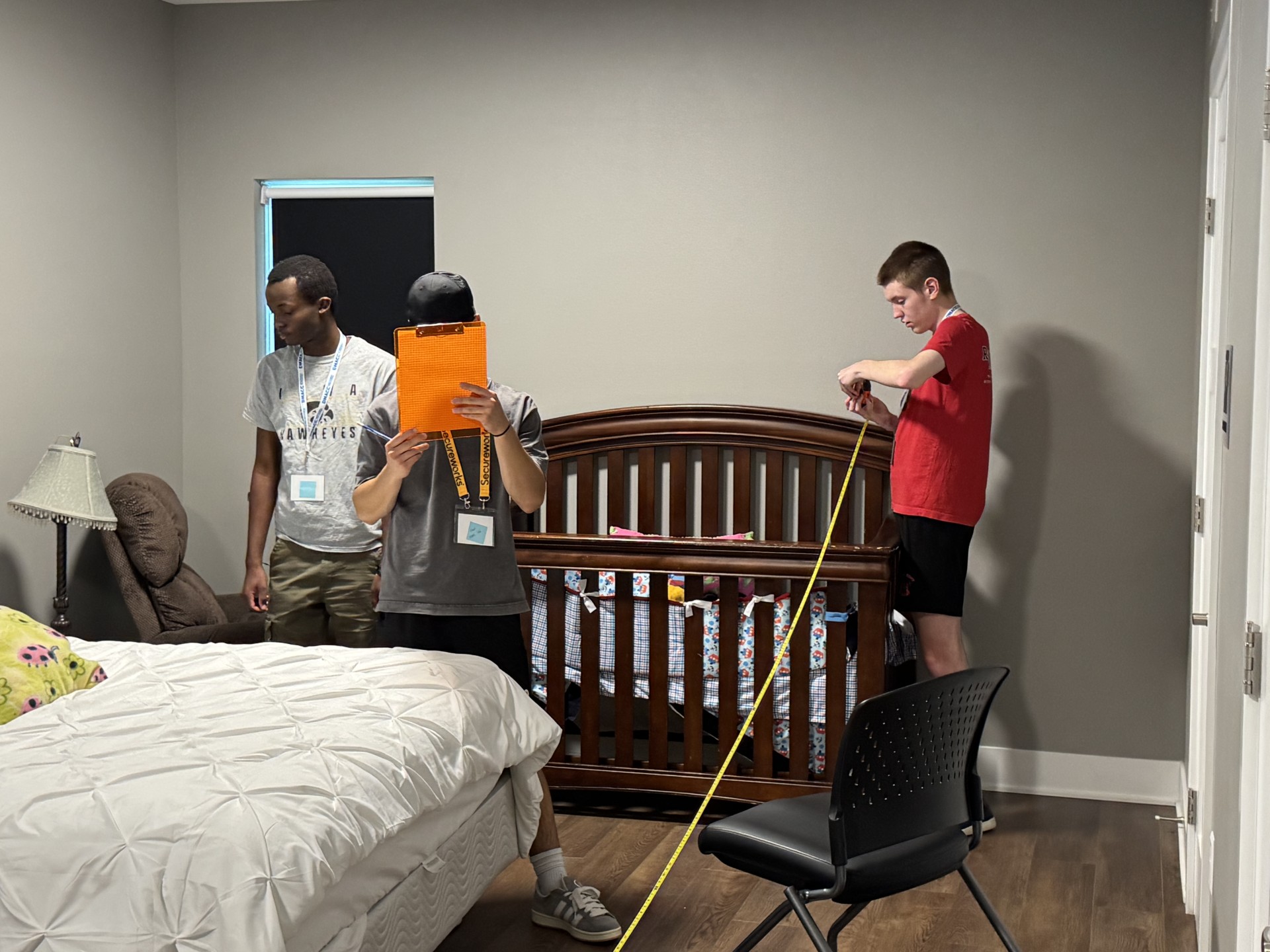
Students spent the week immersed in a realistic criminal investigation that combined traditional forensic techniques with emerging AI technologies. After processing a mock crime scene in DMACC’s Crime Scene House, participants documented evidence, analyzed fingerprints, examined digital evidence and learned proper evidence-handling procedures from law enforcement and forensic experts.
Students also worked alongside electronic evidence detection K-9 teams to locate hidden devices, explored how AI can assist with organizing and analyzing investigative information, heard from Microsoft professionals about technology careers and data center operations, and gained hands-on experience with questioned document examination. The camp culminated with student presentations showcasing their findings, AI-assisted tools and recommendations related to the mock case before sharing their work with family, friends and DMACC staff during a final open house.
According to a post-camp survey, the hands-on approach resonated in ways the students didn’t expect going into the week. Students reported increased confidence with coding, artificial intelligence and technology tools, while gaining a deeper understanding of criminal justice and forensic science.
“I learned about how AI can make it easier for people to create code that can help officers and scientists solve cases,” one student shared.
Students also praised the opportunity to explore potential careers and college pathways at DMACC. One participated, who is planning to attend DMACC for two years, noted that the experience “reduced anxiety” about attending college, saying the camp “put my mind at ease for the Fall. Another described DMACC as “a welcoming place that offers many opportunities.”
To ensure students on the waitlist still had access to the meaningful learning opportunity, Becky Dietenbeck, DMACC professor of Business and Information Technology, created a four-day virtual camp focus on AI concepts, prompt engineering, responsible AI use and hands-on exploration of emerging technologies.
“I learned that AI is much more than just asking a chatbot questions,” one student wrote. “It can be used to solve problems, analyze information and create new ideas.”
Another student said, “This camp helped me understand how AI can be used responsibly and how it will impact future careers.”
Survey results showed students left the camp with stronger technology skills, greater awareness of DMACC opportunities and a deeper appreciation for the role AI can play in solving real-world problems.
Perhaps the strongest endorsement came from a student who wrote, “Thank you to Microsoft for allowing me to explore potential career paths involving tech and crime. This camp has been a great experience, and I would highly recommend it to other students interested in these career paths.”
Microsoft's support was “instrumental” in making both the in-person and virtual camps possible, Deitenbeck said.
“This partnership helps DMACC provide students with exposure to cutting-edge technologies while building awareness of educational and workforce pathways in Iowa's growing technology sector.”