What does Accumold, a globally recognized leader in precision micro-molding and advanced manufacturing, have in common with Anderson Erickson Dairy, a multi-generational, family-owned dairy producer?
Hint: not just their Midwest roots.
Both of these Iowa-based companies have strengthened their workforce through training coordinated by DMACC and funded through Iowa’s 260 programs — a 40-year public-private partnership built to help employers grow while equipping Iowans with in-demand skills.
Since 1983, Iowa’s Industrial New Jobs Training Program (260E) has supported businesses hiring for high-demand roles. Its companion, 260F, helps existing employees build new skills, adopt emerging technologies, and advance into leadership positions.
These programs are administered locally through Iowa’s community colleges, including DMACC, and funded through bonds repaid by payroll taxes generated from new jobs — not through annual state appropriations. The structure is intentionally self-sustaining: as companies grow and add employees, the training investment cycles back into the system.
Between 2014 and 2024, 260E supported $300 million in training for 40,000 new hires statewide — an average investment of about $7,500 per worker.
DMACC Business Resources (DBR) manages one of the largest 260 portfolios in the state, serving employers across a 22-county footprint in central Iowa. From manufacturing and logistics to retail and healthcare, DBR works directly with companies navigating growth, transition, and economic change.
For Anderson Erickson Dairy, this involved expanding manufacturing capacity and increasing technical training. Consequently, DBR consultants brought an electronics faculty member on-site to develop customized plans tailored to the dairies’ production needs.
For a small custom signage business needing specialized skill development, it meant connecting with DMACC’s Auto Detailing program for hands-on training.
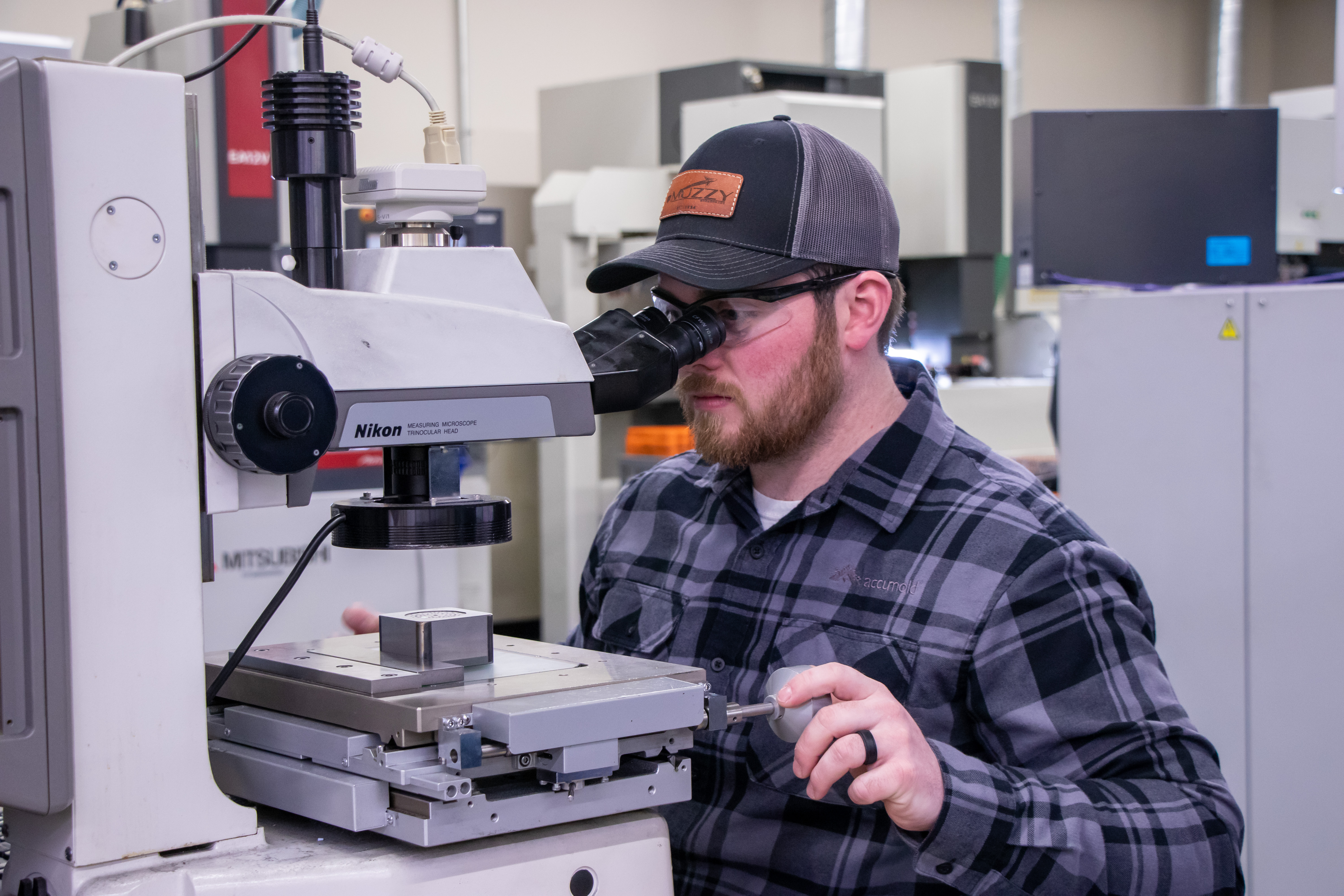
For Accumold, a world leader in micro-molding, 260 funding has supported structured workforce pipelines, hands-on technical training, and the Accumold Scholar program, which creates a pathway for students interested in advanced manufacturing to work at the company while earning a Tool & Diemaking degree from DMACC. In the past 20 years, 260 funding has supported the growth of more than 120 Tool & Die Machinists and Automation/Robotic Technicians through the Accumold Scholars Program.
“It’s created a workforce pipeline for students interested in advanced manufacturing to remain in Iowa by establishing a career at Accumold during their DMACC training and job at Accumold,” said Roger Hargens, President/CEO of Accumold. “It is this talent that has served companies around the world through life-saving devices."
Logan's Story: How Hands-On Training Launched a Local Tool & Diemaking Career
ChildServe, a leading pediatric healthcare provider in Iowa, also partners with DMACC through its ChildServe Scholars Program, helping team members advance their careers by completing clinical programs and earning credentials that strengthen both individual growth and the organization’s workforce capacity.
Programs like 260E and 260F often reduce employer training costs by 50 percent or more. The value lies in aligning and investing in training that is tailored to actual workforce needs and delivered by a local partner who understands the regional economy.
While the funding mechanism is embedded in Iowa code, execution happens locally. Community colleges serve as partners, problem-solvers, connectors, and stewards of the program.
“Our role is to help businesses grow in central Iowa,” said Kim Didier, Executive Director of DMACC Business Resources. “We work alongside employers to understand their goals, design the right training strategy, and ensure these programs are used effectively and responsibly."
Read DBR 2025 Annual ReportMuch of DBR’s work is connecting directly with businesses, and meeting employers where they are. Consultants, like Melissa Chavas-Miller, operate out of home offices, on job sites, and often from their cars.
“We start by asking questions to identify business challenges or opportunities and connect companies to the resources they need for growth, efficiency, or profitability,” Chavas-Miller said. “For instance, we address high turnover through culture or leadership development resources, and fast growth with Lean or EOS support. The 260 funds help us engage businesses directly and provide timely, relevant support.”
Through 260E and 260F, Chavas-Miller applies a lifelong career of problem-solving to identify workforce gaps and helps design training that drives measurable results for companies.
“I have seen companies start with 10 employees and over the years grow to 150 employees thanks to these programs,” Chavas Miller said.
And that stewardship matters, Melissa added. The programs funnel long-term value back into the state through increased workforce competency, higher wages, and ultimately increased income tax revenue as businesses expand and employees advance.
“In the end, if you can help people and businesses solve their problems, then we have a win-win outcome that helps grow our community,” Melissa said.
As Iowa employers navigate labor shortages, rising training costs, and rapid technological shifts, the 260 programs provide stability – and predictability, which are critical when a company is making future plans, such as expansions, adding production lines, or investing in new equipment.
DBR consultants extend their expertise to businesses with plans that are scalable, locally administered, and aligned to employer demand rather than one-size-fits-all solutions.
For DMACC, the impact extends beyond individual companies. Stronger businesses create stronger workforce pipelines. The companies DBR partners with today may be the future workplaces of DMACC students.
From retail to advanced manufacturing, from small family-owned firms to global exporters, the conclusion remains consistent: Strategic workforce investment works.
And at DMACC, that work is happening every day — on factory floors, in classrooms, and in conversations across central Iowa.
For more information, visit: dmacc.edu/dbr
Media Contact:
Savannah Eadens
Public Relations & Communications Specialist
news@dmacc.edu